
How to Maintain Your Motorcycle in Pakistan: A Complete Guide
Motorcycles are one of the most popular modes of transport in Pakistan. They are economical, fuel-efficient, and can easily navigate through traffic, making them a preferred choice for daily commuters. However, like any other vehicle, motorcycles require regular maintenance to ensure their longevity, optimal performance, and safety. Whether you're a new rider or a seasoned motorcycle enthusiast, it’s important to keep your motorcycle in top shape. This article will guide you through the essential steps for maintaining your motorcycle in Pakistan.
1. Regular Oil Changes
Changing the engine oil is one of the most crucial aspects of motorcycle maintenance. Oil acts as the lifeblood of your engine, providing lubrication to its moving parts, reducing friction, and preventing overheating. The weather in Pakistan, particularly during summer, can cause oil to degrade faster, so it's essential to keep an eye on oil levels and change the oil regularly.
How Often Should You Change Oil?
- Every 1,500-2,000 km for smaller motorcycles (like 70cc or 100cc).
- Every 2,500-3,000 km for larger motorcycles (like 150cc or 250cc).
Ensure that you are using the correct oil grade, as recommended by the manufacturer. Popular brands like Mobil, Shell, and Caltex are widely available in Pakistan.
2. Checking Tire Pressure
Proper tire pressure is essential for safe and efficient riding. Incorrect tire pressure can lead to tire wear, poor handling, and even accidents. In Pakistan, where roads may vary from smooth highways to rugged rural paths, maintaining the right tire pressure becomes even more critical.
How to Check Tire Pressure:
- Use a tire pressure gauge (available at most motorcycle accessory shops).
- Check tire pressure when the tires are cold.
- The recommended tire pressure for motorcycles generally ranges between 30-35 PSI for front tires and 30-40 PSI for rear tires, depending on the make and model of your motorcycle.
Ensure that the tires are not too inflated or underinflated. Both conditions can cause handling issues and increase fuel consumption. Also, inspect the tires for wear and tear, cuts, or punctures regularly.
3. Clean and Replace Air Filters
The air filter plays a vital role in ensuring that the engine receives clean air for combustion. A clogged or dirty air filter can reduce engine performance, increase fuel consumption, and lead to long-term engine damage. Pakistan’s dusty environment, especially in cities like Karachi and Lahore, can cause air filters to clog more quickly.
How to Clean/Replace an Air Filter:
- Clean the air filter every 2,000-3,000 km (for regular use).
- Replace the air filter when it becomes excessively dirty or damaged. In Pakistan, it is common to replace the air filter every 6,000-7,000 km.
Cleaning or replacing an air filter is a simple task that you can do yourself or have a mechanic do it during routine service.
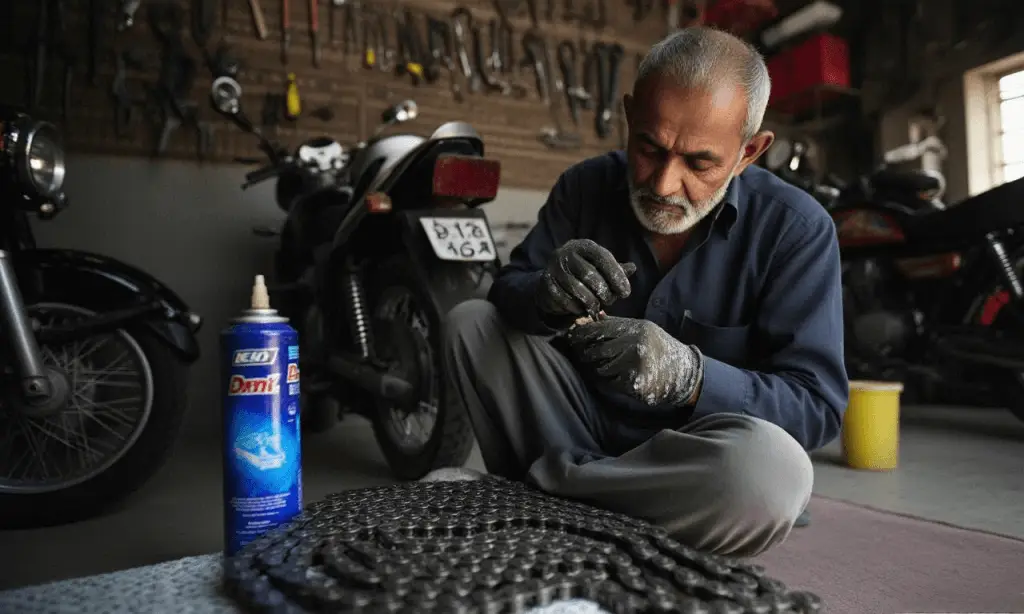
4. Keep the Chain Lubricated
The chain is a crucial part of your motorcycle’s transmission system. It transfers power from the engine to the wheels and requires regular lubrication to ensure smooth operation. In Pakistan, where riding conditions can range from dry, dusty roads to rainy weather, the chain is susceptible to wear and rust.
How to Maintain the Chain:
- Lubricate the chain every 500-1,000 km, or as often as needed, depending on road conditions.
- Check the tension of the chain regularly; it should neither be too tight nor too loose. The ideal tension should be around 20-30 mm of slack.
- Clean the chain with kerosene or chain cleaner and apply a suitable chain lube (available at motorcycle accessory shops in Pakistan).
Proper chain maintenance will prolong its life and ensure a smoother ride.
5. Battery Care
Motorcycle batteries in Pakistan often face harsh conditions due to extreme temperatures, especially in summer. Proper maintenance can prevent battery failures and extend its life.
How to Maintain the Battery:
- Check the battery terminals for corrosion and clean them using a wire brush or a mixture of baking soda and water.
- Ensure the battery is charged properly, and check the voltage regularly. A motorcycle battery should ideally maintain a voltage between 12.6 and 13.6 volts.
- If your battery is a non-maintenance type, ensure the water level is adequate. If it’s a sealed battery, replace it every 1-2 years to avoid unexpected breakdowns.
6. Keep Your Motorcycle Clean
Regularly cleaning your motorcycle not only keeps it looking good but also helps identify potential issues, such as oil leaks, wear on parts, or foreign objects lodged in the tires or brakes.
How to Clean Your Motorcycle:
- Wash your motorcycle with mild soap and water, avoiding direct application of water to the exhaust and electrical parts.
- Use a microfiber cloth to wipe down sensitive components like the seat, mirrors, and handlebars.
- Apply a polish or wax to protect the paint and keep it shiny.
7. Brake Maintenance
Brakes are critical for your safety. Whether you have disc brakes or drum brakes, regular maintenance is necessary to ensure they perform optimally.
How to Maintain the Brakes:
- Check the brake fluid level and top it up if necessary (especially for disc brake systems).
- Regularly inspect the brake pads for wear. Replace them when the pad thickness is less than 2mm.
- Test the brakes before every ride. If you hear any strange noises or feel any loss in braking power, have them checked immediately.
8. Regular Inspection of Lights and Indicators
In Pakistan, where riding conditions can change rapidly, having functioning lights and indicators is essential for both visibility and communication with other road users.
How to Maintain Lights:
- Regularly check your headlights, taillights, and turn signals.
- If any bulbs are flickering or not working, replace them immediately.
- Ensure your motorcycle’s horn is working effectively, especially in crowded urban areas.
9. Tighten Loose Parts
Over time, the constant vibrations of the motorcycle can cause bolts, screws, and other parts to loosen. This is a common issue, especially for motorcycles that are frequently used on rough roads in Pakistan.
How to Tighten Loose Parts:
- Regularly check parts like the handlebar, foot pegs, and mirrors for tightness.
- Ensure the bolts and nuts on the frame and suspension are secure.
- Use a wrench or socket set to tighten any loose parts.
10. Professional Servicing
While most of the above tasks can be done at home, periodic professional servicing is important. A trusted mechanic can spot issues that may not be apparent to the rider and can perform in-depth checks. In Pakistan, there are numerous workshops specializing in motorcycle maintenance.
Disclaimer:
The maintenance advice provided in this article is general in nature and intended for informational purposes only. It is recommended that motorcycle owners refer to their owner’s manual for specific maintenance guidelines and consult a professional mechanic for complex repairs or concerns. Motorcycle maintenance is an ongoing process, and neglecting regular checks can result in costly repairs or safety risks.
Elizabeth
|
2025.03.24


